

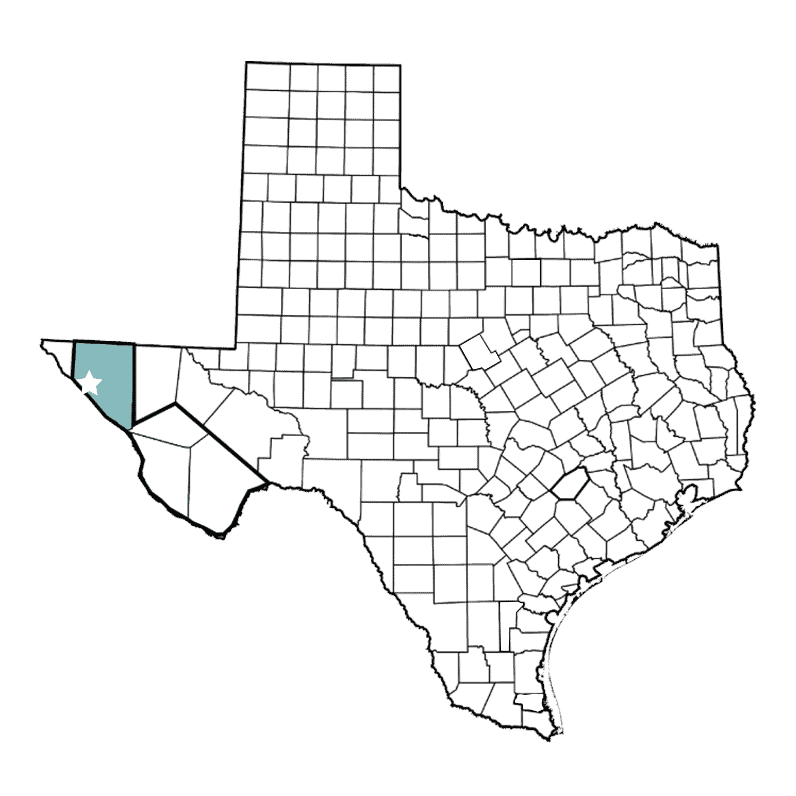
Hudspeth County

Fort Hancock Community Flood Knowledge Collection Project
Fort Hancock is a community in Hudspeth County that experiences unique challenges due to frequent flash flooding, non-traditional/unregulated housing, and community berm construction. Roads and bridges washing out are a particular danger and concern to the county.
The County Judge, County Commissioner, and Emergency Management Coordinator are all interested in addressing flooding issues in this community, but there are no up-to-date traditional flood data sources available to accurately map, model, and communicate the current risks to the community. Fort Hancock does not show up in traditional risk analyses anywhere as being at risk for flooding, but they are flooding almost every year from smaller, flash-flood events.
The DRIP team and county leaders decided on this unique pilot project designed specifically to address the “data desert” found in small, underserved communities like Fort Hancock. This project developed a process to collect community-held knowledge (such as photos; verbal descriptions of water lines and dates of major storms leading to flooding; and verbal identification of areas/locations prone to flooding, etc.) to inform future mapping and modeling products.
The main products were:
- A process to systematically collect data to document and describe flooding in this flash-flood vulnerable community, initially through a Qualtrics survey which was then field tested and developed into a custom application to collect community survey data and photos (in both Spanish and English); and
- A GIS Data Viewer to display the information collected from the community along with official flood data sources from the Federal Emergency Management Agency and the Texas Water Development Board, combined with other information, such as the location of structures.
The project included the following components:
- Community data collection
Gathered evidence of flooding to support grant/funding applications and policy/planning decision making. This was a door-to-door data collection effort using trained community members to build community-driven flood hazard maps.
- Collection of aerial images
Images of the community were collected via drone to better map and understand land use/land cover (LULC) and existing/unofficial/modified local drainage.
- Exploration of simple tools to display information
Hudspeth County was provided with an interactive tool that gives the County the ability to view flood hazard data within the community through a simple GIS interface, which uses official flood data sources and was combined with other information, such as the location of structures.
- Recommendations for future use
Recommendations were provided for potential future uses of the collected data for improved modeling or other risk visualization techniques for the community.
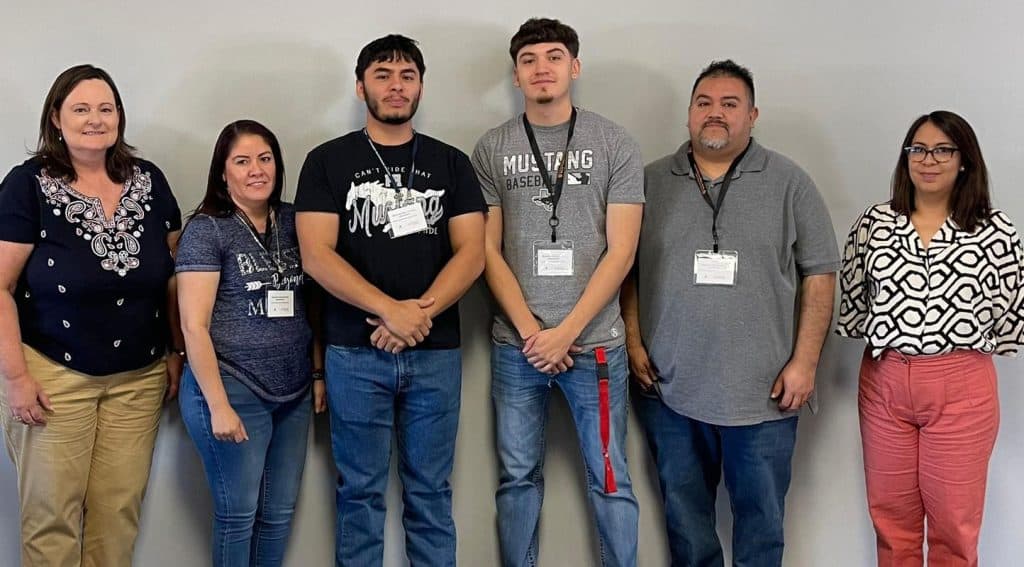
Hudspeth County Data Collection Team: Keri, Juvencia, Josh, Bryan, Willy, and Samanta
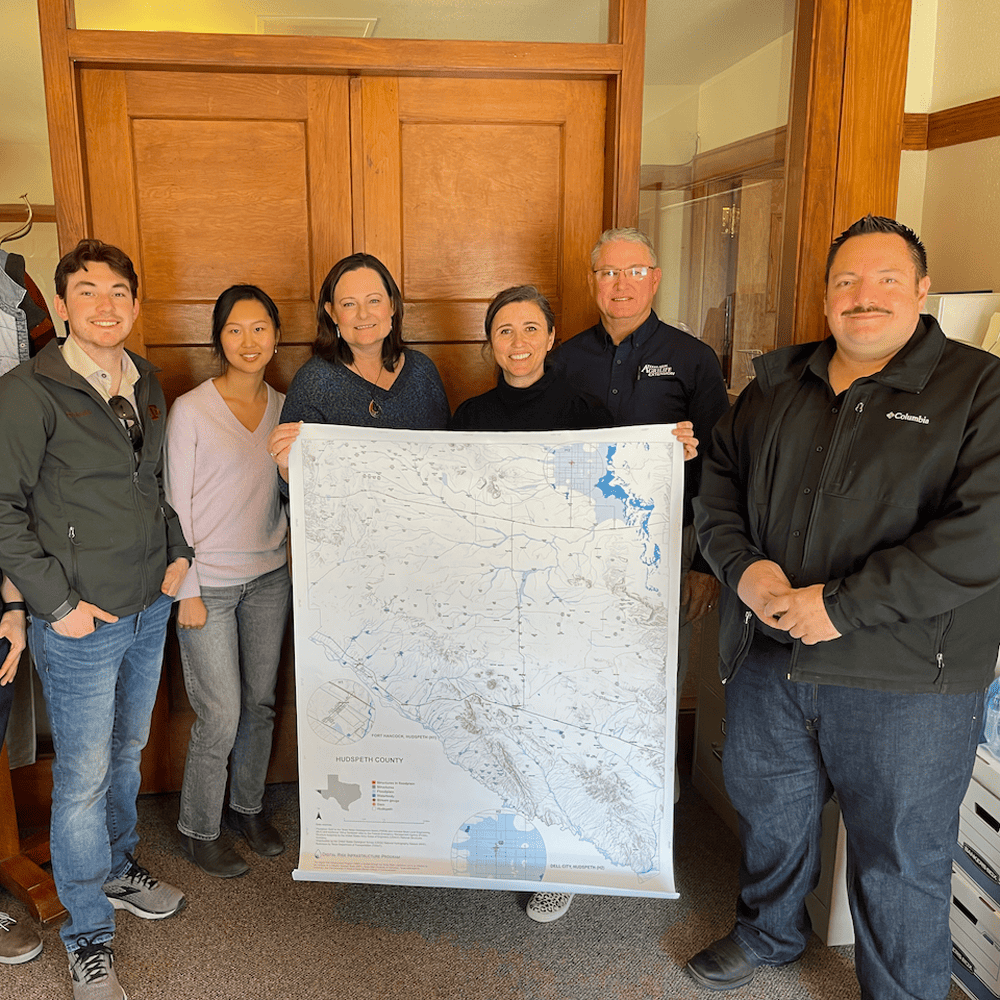
DRIP team met with Hudspeth County to share flood maps.
Pictured left to right: Nick Diaz, TAMU; Yifan Xu, UT; Dr. Keri Stephens, UT; Joanna MacKenzie, Hudspeth County Judge; Monty Dozier, TAMU AgriLife; and Jamil Moutran, Emergency Management Coordinator, Hudspeth County.
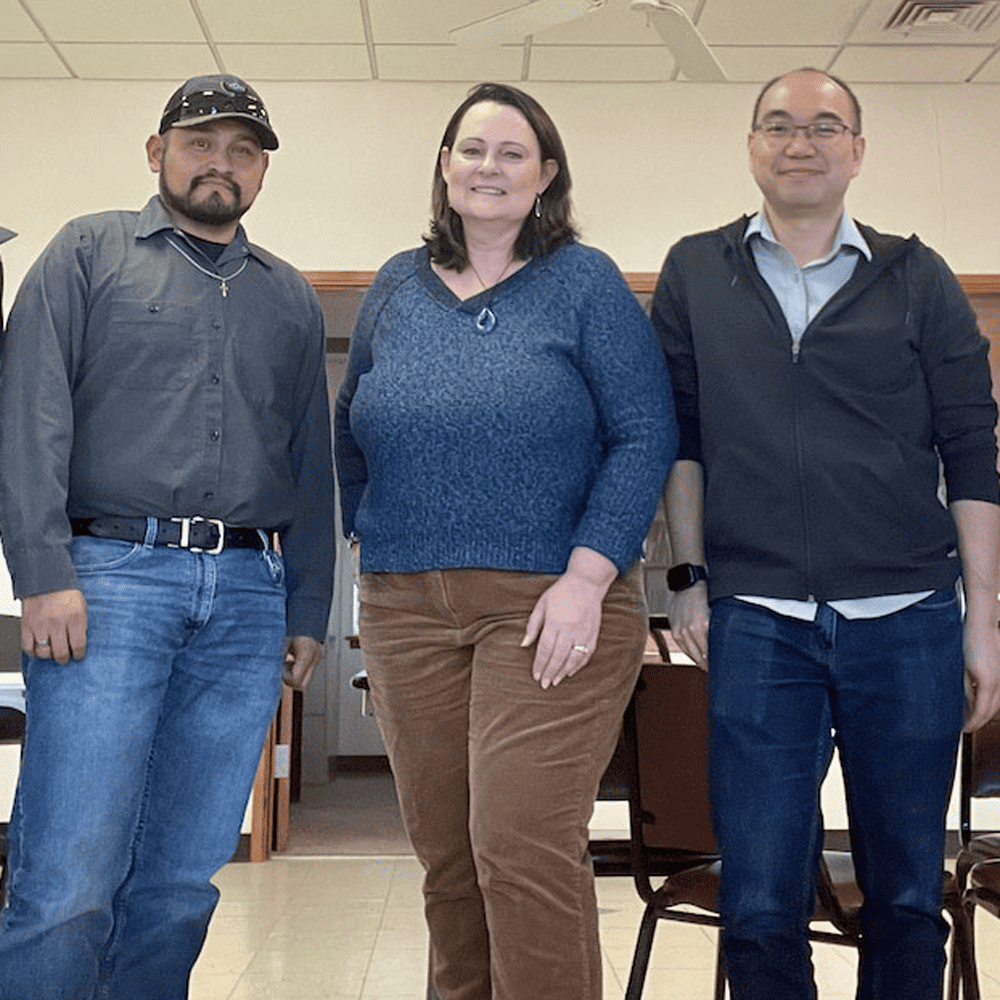
DRIP team met in Fort Hancock to discuss flooding.
Pictured left to right: Sergio Quijas, Commissioner, District 2 Hudspeth County; Dr. Keri Stephens, UT; and Dr. Andrew Juan, TAMU.
The project timeline will involve the following phases:
Training phase
May – June 2023
Training local community members to collect and upload data
Data collection phase
June-September 2023
Georeferencing the images collected and creating a simple visualization of the data in the form of a community floodplain map
Data analysis & visualization phase
September – October 2023
Conducted during both the monsoon season and non-monsoon season and including drone flights in August
Period of review, ground-truthing, and finalization
October-December 2023
Obtaining feedback from the community and finalizing the map, as well as making all of the data available to the community and providing recommendations for future use of the data.
Stories from the Desert
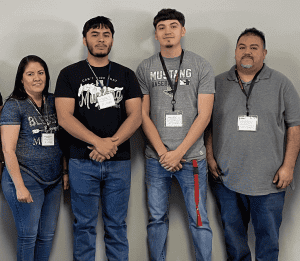
Data From the Heart of the Desert: A Community Making a Difference
Fort Hancock, also portrayed in our previous blog posts, is a community of hard-working individuals. Even though this is a desert, it is also a
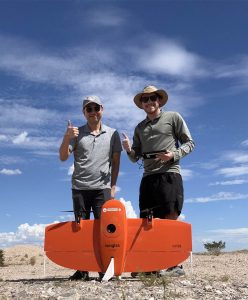
Using Drones to Address Data Deserts
By Nicholas Diaz, PhD student, and Dr. Andrew Juan, Associate Research Scientist Arriving in Fort Hancock, Texas for the first time, it was clear to
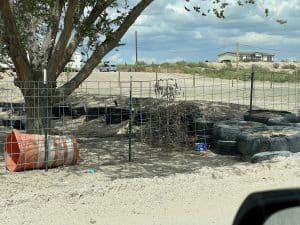
A True Data Desert: Fort Hancock, Texas
Imagine being new in a community. Regardless of whether you rent or own your home, you need to get your utilities—e.g., water, power, trash—connected and